Garden Maintenance Regents Park: Recycling and Sustainability
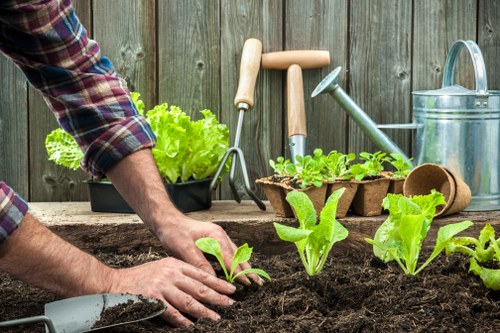 Garden Maintenance Regents Park teams are committed to creating an eco-friendly waste disposal area and a sustainable rubbish gardening area across Regent's Park and surrounding green spaces. Our approach to regents park garden maintenance centres on practical, trackable targets, working with local borough policies and community partners to cut carbon, reduce landfill, and return nutrients to the soil. We combine careful site sorting with modern, low-emission logistics to make sure garden waste is handled responsibly from verge to transfer station.
To deliver a clear sustainability roadmap for Regent's Park garden maintenance, we set a measurable recycling percentage target: we aim to recycle 75% of all green and site-generated waste within two years. That target covers grass cuttings, prunings, soil arisings and recyclable packaging from materials used on site. Achieving this relies on source separation, on-site composting where feasible, and partnerships that enable reuse — not just disposal.
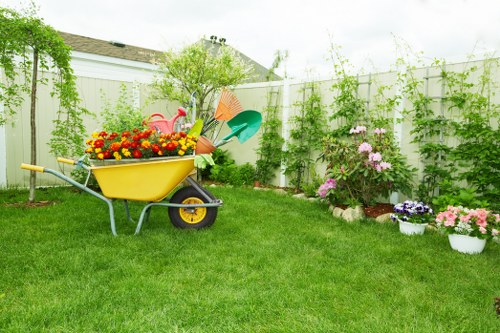
How the boroughs' approach to waste separation helps
The local boroughs that serve Regent's Park encourage clear fractions for waste: separate food waste, dry recycling, and residual refuse, with garden waste collected as a separate stream in many areas. By aligning our regent's park garden maintenance routines with borough collection schemes — for example, pre-sorting green waste, cardboard and mixed recyclables — we reduce contamination and increase the amount of material that can be diverted from landfill to composting or recycling facilities.
Local transfer stations and responsible routing
We use nearby local transfer stations and household waste recycling centres (HWRCs) operated by the City of Westminster and the London Borough of Camden, and liaise with municipal transfer points to ensure correct processing. Routing to the most appropriate transfer station is planned to minimise mileage and emissions. Where possible we deliver segregated loads directly to specialised composting facilities or wood-reclamation yards to keep material circulating in the local green economy.
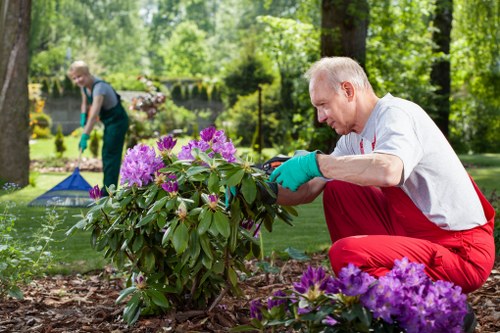 On-site segregation is central to our sustainable rubbish gardening area. Typical activities include setting up separated bays for:
- Green waste (grass, hedge trimmings, leaves) for community or industrial composting
- Wood and timber suitable for chipping and re-use in mulches or habitat projects
- Cardboard and clean plastics from packaging, sent to dry recycling streams
We support circular outcomes: chipped wood becomes mulch that returns to planting beds, compost is fed into soil improvement programmes, and larger items are assessed for reuse. Working with local charities and social enterprises reduces waste and benefits community groups — for instance, donating usable topsoil or compost to allotment projects and park volunteering groups. Our charity partners help redistribute plantable materials so they avoid landfill and instead support urban growing initiatives.

Partnerships with charities and community groups
Key relationships include collaborations with conservation charities and community allotments that accept compost, wood chips and repairsable equipment. By establishing formal partnerships with environmental NGOs, local volunteer groups and reuse organisations, our regents park garden maintenance programmes create pathways for surplus materials to be turned into social and environmental value. Examples of partnership activities are:
- Compost donations to community gardens and allotments
- Donation of reclaimed timber to habitat-building projects
- Training sessions with volunteers on low-waste gardening practices
Vehicle emissions are a major consideration in any green-space operation. We operate a fleet of low-carbon vans and small electric vehicles to service the park. These include battery-electric vans, plugin-hybrid utility vehicles, and pedal-assist cargo bikes for short intra-park trips. Route optimisation software and telematics further cut fuel use by planning efficient collection rounds and avoiding unnecessary journeys.
To reinforce sustainability, our procurement emphasises greener alternatives: bio-based mulches, locally-sourced compost, and tools designed for longevity and repair. We monitor performance through a simple dashboard tracking the recycling percentage, landfill diversion rates, diesel-equivalent savings from low-carbon vans, and volumes donated or reused through charity partners. Regular reviews ensure continuous improvement towards our 75% recycling goal.

Practical steps for a greener garden maintenance programme
Implementing sustainable gardening and rubbish management on a practical level includes:
- Set up clear on-site bins for green waste, wood, cardboard, and mixed recycling
- Introduce small-scale composting for trimmings that comply with local regulations
- Use electric or low-emission vehicles for collections and deliveries
- Partner with charities to reuse or redistribute materials
- Engage with borough waste policies to maximise recycling rates
By combining thoughtful design of the eco-friendly waste disposal area and an efficient sustainable rubbish gardening area, Garden Maintenance Regents Park can reduce carbon, support the local circular economy, and increase biodiversity across the park. Our approach to regents park garden maintenance is pragmatic, measurable and community-focused — balancing aesthetic upkeep with strong environmental performance.